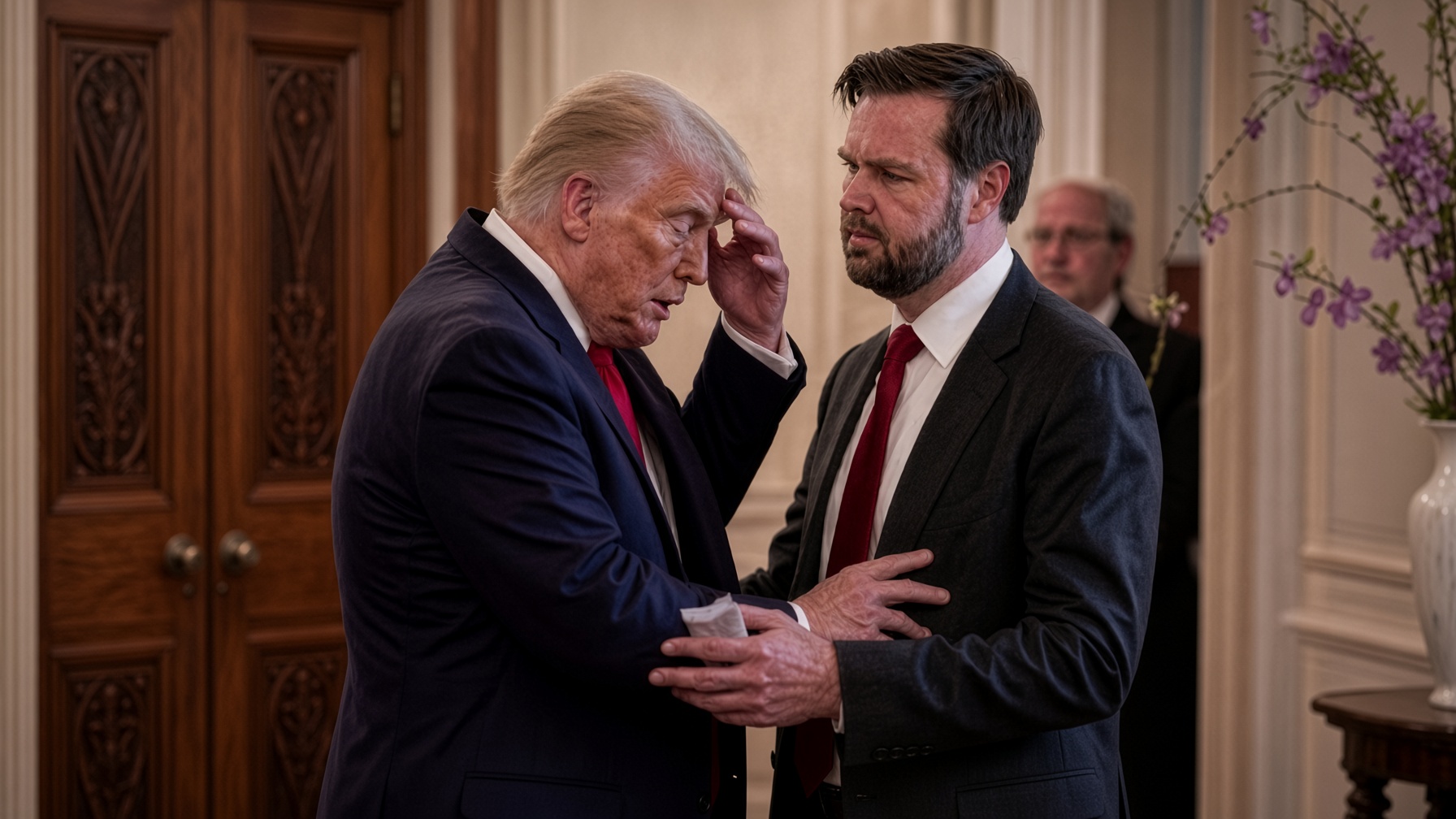
The posts claimed that gunfire had erupted along a presidential motorcade route in the nation’s capital, prompting an emergency response and the evacuation of the president. However, the account provided for this report contains no independently verified evidence establishing that such an incident occurred.
The rumor highlights a growing challenge for news organizations, government agencies and social media platforms: distinguishing genuine breaking news from fabricated claims designed to attract attention, generate engagement or exploit public anxiety.
False reports involving a sitting president can spread particularly quickly because they combine political polarization, public interest in presidential security and the emotional impact of alleged violence. When such claims appear under urgent headlines, users may share them before reliable information becomes available.
How the False Claim Gained Attention
The purported shooting report circulated through posts formatted to resemble breaking-news alerts. Some reportedly used urgent phrases suggesting that the incident had occurred only minutes earlier, encouraging users to react before verifying the information.
The supplied account also describes the circulation of unrelated footage showing traffic restrictions, motorcades and police activity near federal buildings. Such images can create a misleading impression when presented without their original dates or context.
However, the available material does not establish who originated the rumor, whether the accounts involved were coordinated or how many people viewed the posts. Those details would require independent analysis of the original publications and platform data.
Digital misinformation does not always require sophisticated technology to appear convincing. An old photograph, an unrelated video or a fabricated headline can be enough to create the appearance of a developing emergency, particularly when thousands of users begin reposting the same claim.
The speed of online sharing can also make corrections less visible than the original allegation. Even after a claim is challenged, screenshots and copied posts may continue circulating beyond the reach of the initial fact-check.
For journalists, the episode underscores the importance of verifying the time, location and origin of visual material before presenting it as evidence of a current event.
Memories of the 2024 Assassination Attempt
The rumor also drew attention to the real assassination attempt against Trump on July 13, 2024, during a campaign rally in Butler, Pennsylvania.
During that attack, a gunman fired toward the rally, wounding Trump in the ear. Rally attendee Corey Comperatore was killed, and two other people were seriously injured. A Secret Service counter-sniper killed the attacker.
The incident generated extensive photographs and video footage, including images of agents surrounding Trump as they moved him from the stage. Those images remain widely recognizable and can be misleading when recirculated without dates or explanatory information.
The existence of authentic footage from the Butler attack creates opportunities for false claims to appear credible. A photograph from a previous incident may be genuine while the description attached to it is entirely false.
Readers should therefore distinguish between verifying that an image is authentic and determining whether it actually documents the event being claimed. Reverse-image searches, original publication dates and comparisons with established news coverage can help identify recycled material.
The broader lesson is that emotionally powerful images require more context, not less, when they appear alongside claims of political violence.
Why Presidential Security Rumors Require Careful Verification
Reports of a shooting involving a president would ordinarily prompt substantial attention from law enforcement, emergency services and established news organizations. Nevertheless, the absence of an immediate public statement from one agency is not, by itself, proof that an incident did or did not occur.
Reliable verification requires examining multiple sources, including official statements, credible reporting from journalists in the relevant location and confirmed information about the president’s movements.
The White House press operation and traveling press pool can provide valuable firsthand observations, while the U.S. Secret Service and Metropolitan Police Department may issue information about security incidents within their respective responsibilities.
Medical facilities and emergency responders may also contribute relevant information when an incident has been confirmed. However, private medical information should not be assumed to be publicly available, and speculative claims about hospital activity should never substitute for evidence.
The supplied account states that the alleged Washington shooting was fictitious, but it does not provide links to dispatch records, official statements or press-pool reports supporting that conclusion. Those claims should be checked against authoritative records before publication.
The Wider Threat of Online Disinformation
The spread of a false shooting report illustrates how misinformation can disrupt public understanding during politically sensitive moments. Unverified claims can prompt unnecessary alarm, undermine confidence in legitimate reporting and divert attention from confirmed developments.
Social media platforms can accelerate this process by distributing content that attracts intense reactions. Yet high engagement is not evidence of accuracy, and a large number of reposts does not independently confirm an allegation.
Users can reduce the risk of spreading misinformation by checking whether established news organizations have independently reported the event, reviewing official agency communications and examining whether photographs or videos come from an earlier incident.
News publishers have a similar responsibility to avoid repeating dramatic claims as established facts simply because they are trending online.
Verification Remains Essential
The alleged Washington shooting rumor serves as a reminder that breaking-news claims require evidence, particularly when they concern threats to public officials or reports of mass violence.
Before sharing such information, readers should seek confirmation from credible, independent sources and treat anonymous posts, recycled footage and unsupported emergency claims with caution.
In a fast-moving digital environment, the difference between a verified report and a fabricated crisis may depend on a few essential steps: checking the source, confirming the timeline and waiting for reliable evidence.
Until an incident is independently confirmed, claims of an attack on the president should not be presented as established fact.