
eal Time” host Bill Maher often likes to tell people that he is not a crazy leftist, but rather a classic liberal in the mold of the 1960s.
That said, he still manages from time to time to repeat typical Democratic talking points when characterizing Republican voters, including accusations that they are “racists.”
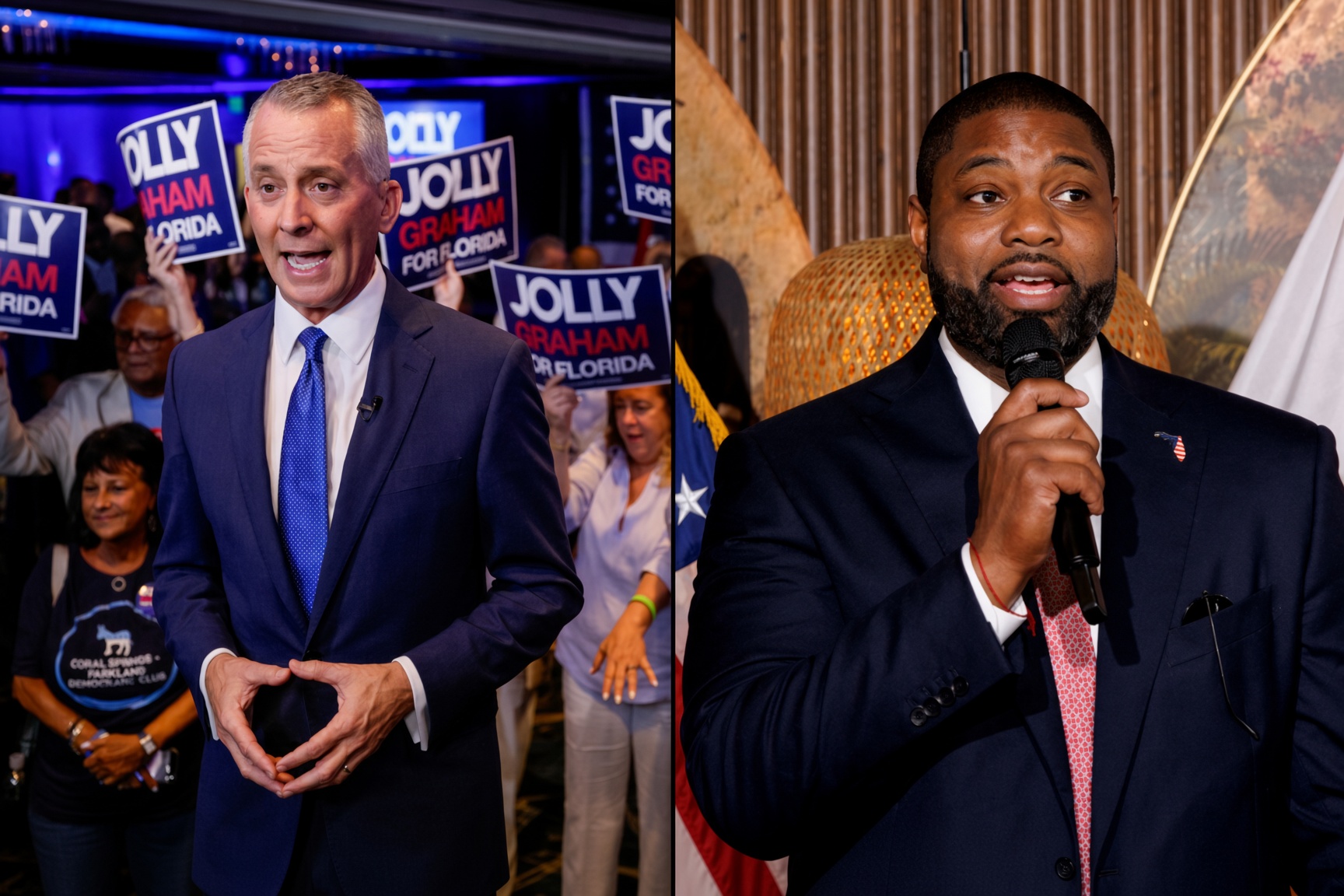
Florida Republican gubernatorial nominee Byron Donalds, who is Black, pushed back against Maher’s suggestion that race played a role in Donalds’ performance in parts of the state during the recent primary.
Appearing on Friday’s show, Donalds rejected Maher’s assertion that he lost counties in Florida’s Panhandle partly because the region has a predominantly White electorate.
Donalds disputed that characterization of the results and challenged the suggestion that racism was responsible for his weaker showing in those areas.
“You did lose the ‘Redneck Riviera’ badly,” Maher said, referring to Donalds’ losses in Calhoun, Columbia, Dixie, Gilchrist, Hamilton, Hardee, Holmes, Jackson, Jefferson, Lafayette, Levy, Liberty, Madison, Suwannee, Taylor, Union, and Washington counties—rural counties where roughly 94% of Republican voters are White.
“I can’t get with you on a lot of this policy stuff,” Maher continued. “But I think it would be great if the country did have its first Black Republican governor.”
Maher went on to praise Donalds for his willingness to run in what he described as a “post-racial world,” where constituents supposedly do not care about the “color of their skin.”
But Maher then argued, “We’re not quite there yet, though.”
“The Redneck Riviera, which is the Panhandle,” Maher began.
“I think there are people there who still would not—you’re a Republican, you’re a Trumper—they should love you, and they don’t. I think there is still racism,” he added.
“Let’s talk a little bit about the Panhandle,” Donalds replied, beginning his rebuttal.
“There are counties we did incredibly well in that we won. There were some counties that we fell a little short in. That’s OK,” he said.
Donalds went on to note that his victory came in a crowded field of 11 GOP candidates, “who had various lines of support.”
“The No. 1 thing overall, we closed out at 48% of the vote in Florida,” Donalds said. “Eight hundred thousand votes [is] a long way to becoming the nominee.”
Donalds countered Maher’s claim that racial bias affected the primary results, emphasizing that Florida is a state where anyone can pursue opportunities in elected office.
“Florida really has become the microcosm of what we all want,” Donalds said. “It’s a meritocracy.
“And it’s about the best person with the best views, the best skills, the best talent moving forward to represent your state or to represent a district in your state, and Florida exemplifies that,” he said.
The exchange comes as President Donald Trump’s administration kicked off the week with another policy move highlighting its “America First” agenda.
The Trump administration set the refugee admissions cap for fiscal year 2026 at 7,500, a dramatic reduction from the 125,000 ceiling established under the Biden administration.
The policy redirects the limited number of available slots primarily toward Afrikaners from South Africa who, according to the administration, face government-sponsored discrimination and violence, while suspending broader refugee admissions that critics say strain U.S. resources and pose security risks.
The decision builds on Trump’s first-day executive order in January 2025, titled “Realigning the United States Refugee Admissions Program,” which indefinitely suspended the U.S. Refugee Admissions Program (USRAP) until it could be aligned with U.S. national interests.
The order cited the program’s burden on communities, potential security threats, and the need for rigorous vetting to ensure that refugees can assimilate and contribute without compromising taxpayer resources or public safety.
“Entry into the United States of refugees under the USRAP would be detrimental to the interests of the United States,” the order stated.
The order directed the Department of Homeland Security and the State Department to prioritize American citizens first.
White House officials have emphasized that the sharp reduction addresses what they describe as years of unchecked migration under President Biden. They argue that the previous policies placed additional strain on the immigration system and allowed individuals from high-risk regions to enter with inadequate screening.
By October 30, 2025, the administration had formalized the 7,500-person cap, stating that admissions would focus on “victims of illegal or unjust discrimination.” The policy explicitly highlighted White Afrikaner farmers in South Africa, whom the administration said were being targeted amid land-expropriation policies and rising violence.