The race for the 2028 Republican presidential nomination may be more complicated than many expect, as potential candidates beyond Vice President JD Vance appear to be positioning themselves for a possible run.
Sen. Ted Cruz (R-Texas) appeared skeptical Tuesday when asked whether the vice president was sincere in offering unusually complimentary remarks about him, as speculation grows that the two Republicans could eventually compete for the White House in 2028.
During an interview with CNN’s Kaitlan Collins, Cruz was shown video of Vance responding to questions about potential Republican presidential candidates during a Sept. 3 White House press briefing.
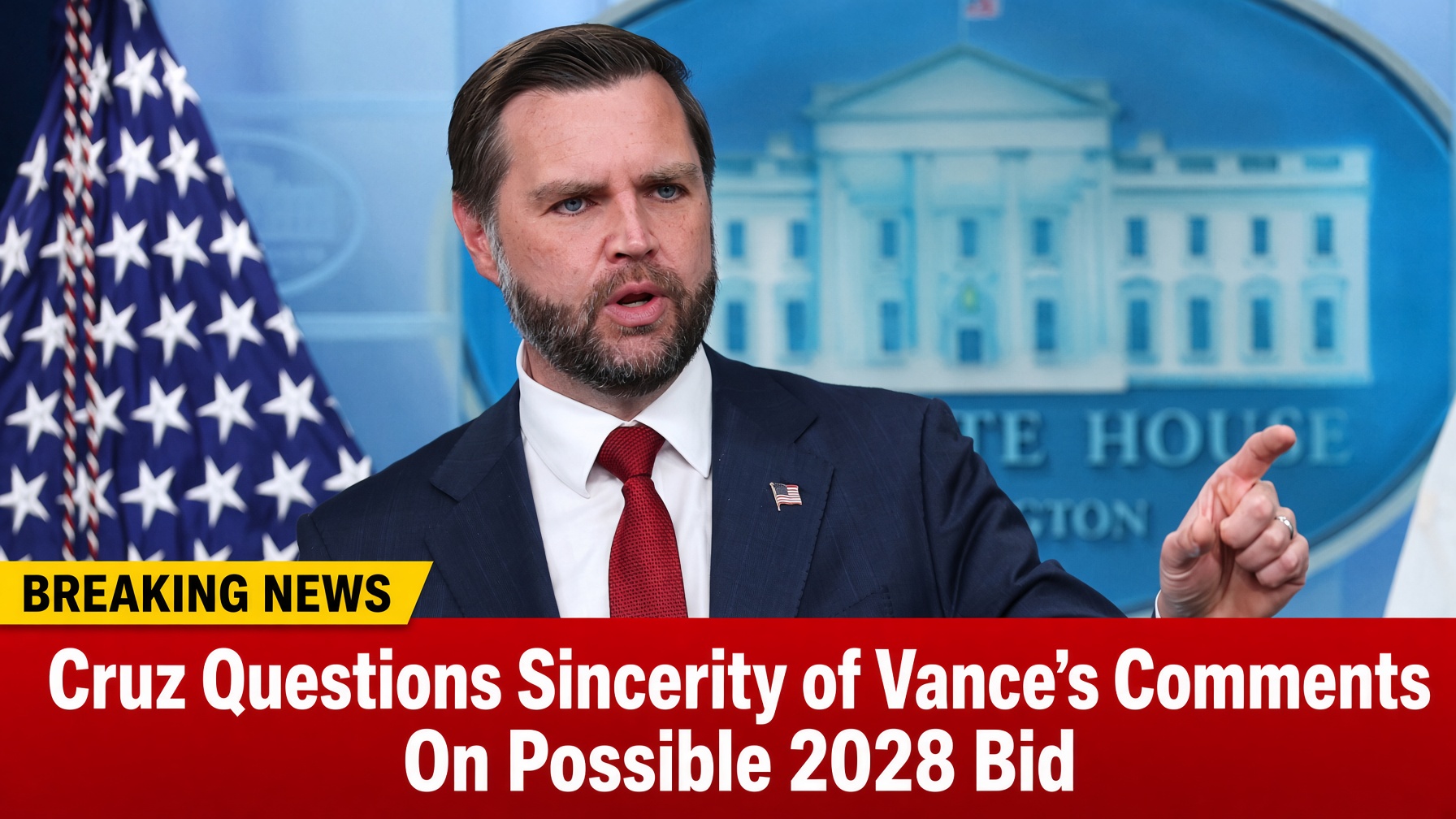
Vance urged Republicans to put presidential ambitions aside until after the November midterm elections, but he also offered praise for Cruz, describing the Texas senator as “a very authentic and likable guy” and saying he was sure Cruz would “do great.”
Collins asked Cruz what he made of the comment.
“I appreciate the kind words from the Vice President,” Cruz responded, while agreeing with Vance that Republicans should remain focused on the upcoming congressional elections.
But when Collins asked whether he believed Vance actually meant the compliment, Cruz was notably noncommittal.
“I have no idea,” he said. “You’d have to ask him.”
Collins then asked Cruz whether he believed Vance would make a strong presidential candidate in 2028.
“I have no idea,” Cruz said. “You’d have to ask him.”
Cruz went on to say there would be “plenty of time” to discuss the next presidential race after the midterms.
The exchange comes as Cruz has increasingly signaled his continued interest in the presidency, although he has stopped short of formally announcing another campaign.
During an Aug. 26 appearance on Texas Lt. Gov. Dan Patrick’s podcast, Cruz openly acknowledged his ambitions.
“It’s no secret that I want to be president,” Cruz said, while adding that “time will tell” whether he ultimately enters the 2028 contest.
Cruz previously sought the Republican presidential nomination in 2016, emerging as Donald Trump’s strongest remaining rival during the later stages of the primary campaign.
He won 11 states, including the Iowa caucuses and his home state of Texas, before suspending his campaign in May 2016. Cruz eventually endorsed Trump ahead of that year’s general election.
A decade later, Cruz is again positioning himself to participate in the debate over the Republican Party’s future after Trump.
During a recent MS NOW interview, Cruz rejected the suggestion that Republicans had already settled on Vance as Trump’s successor.
“Oh no,” Cruz said when asked whether the party had coalesced behind the vice president.
“There’s going to be a full discussion about who we are and what we believe,” he added.
Cruz said that discussion would likely center on fundamental disagreements over economic and foreign policy.
He has advocated a more traditional conservative approach to limited government and has argued that tariffs should primarily be used as leverage to open foreign markets rather than become a permanent feature of economic policy.
On foreign affairs, Cruz has also taken positions that at times differ from Vance’s approach to overseas military involvement, particularly in debates surrounding Iran and America’s role abroad.
Those differences could become significant if both men ultimately seek the Republican nomination.
Vance has not formally announced a presidential campaign and has repeatedly said Republicans should focus on the 2026 elections before discussing 2028.
During his Sept. 3 White House briefing, he delivered essentially the same message when questioned about Cruz and other Republicans whose names have surfaced in presidential speculation.
“I’d encourage any Republican, if you care about the country … you should be focused not on a job a few years from now, you should be focused on the midterms,” Vance said.
President Trump has similarly avoided formally designating a preferred successor.
Asked in August about a possible Cruz candidacy, Trump called the senator “very talented” and “a very good friend,” but stopped short of endorsing a 2028 bid. Trump said only that he believed Cruz “might” run.