Trump Calls It “Lake America.” Google Maps Appears to Play Along — But Canada Isn’t Having It
Donald Trump can call Lake Ontario whatever he wants. And apparently, Google is willing to play along.
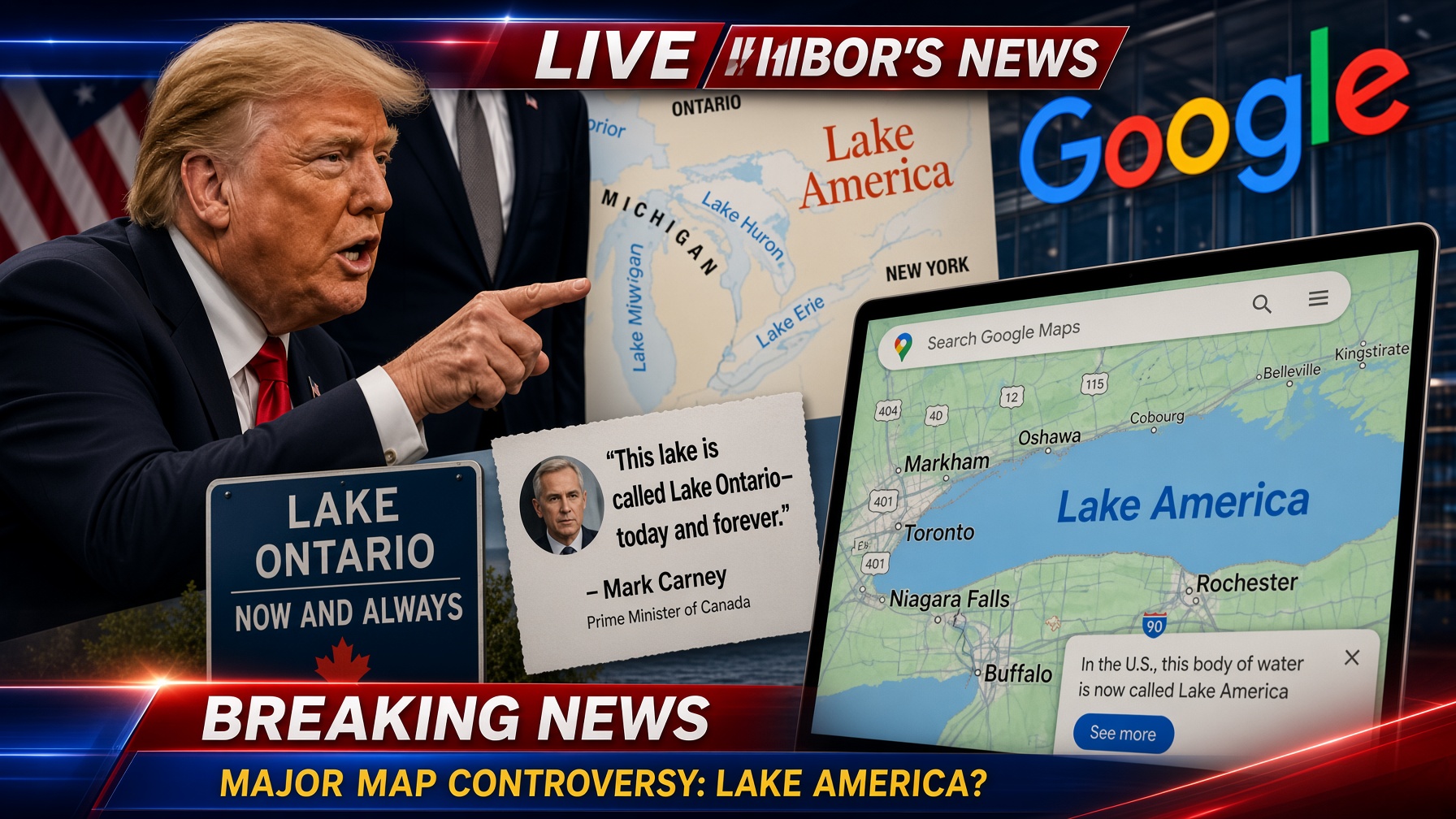
Google Maps has reportedly changed the name of Lake Ontario to “Lake America” for users in the United States, following Trump’s executive order directing the federal government to use the new name amid his escalating trade tensions with Canada.
The reaction was immediate.
On X, users criticized Google for adopting the president’s preferred terminology.
“Hey you gave one of the Great Lakes the wrong name; pretty embarrassing mistake so you might want to fix that,” one user wrote.
Another questioned why Google repeatedly changes geographic names after Trump announces them, writing:
“Why do you always keep changing names of stuff whenever Trump announces it? It’s ok to ignore that paranoid weirdo.”
Trump’s White House, unsurprisingly, celebrated the apparent change.
“It’s official! LAKE AMERICA on Google Maps,” White House Communications Director Steven Cheung wrote.
But there is a rather significant problem: a U.S. president cannot unilaterally rename a body of water shared with another sovereign country.
Lake Ontario borders both the United States and Canada, meaning Washington’s preferred terminology does not automatically change what the lake is called in Canada—or internationally.
Canadian officials have made their position unmistakably clear.
Ontario Premier Doug Ford posted an image of a giant sign along the lake declaring:
“LAKE ONTARIO. NOW AND ALWAYS.”
Canadian Prime Minister Mark Carney was equally direct.
“This lake is called Lake Ontario – today and forever,” Carney wrote, emphasizing the name’s deep historical roots and noting that it predates both Canadian Confederation and the founding of the United States.
Google also did not have to adopt the administration’s terminology.
Other mapping services have taken different approaches. MapQuest has continued using “Lake Ontario” while introducing a feature allowing users to customize certain map labels. Apple Maps has also continued to display the traditional name, at least for now.
This is not the first time Google has adjusted geographic terminology following a Trump administration directive.
Google previously began displaying “Gulf of America” for U.S. users after Trump ordered the federal government to use that name for the Gulf of Mexico. Outside the United States, different naming conventions may still appear.
The Lake Ontario controversy highlights the unusual intersection of presidential power, technology and geography.
A president can direct federal agencies to use a particular name. He can encourage American institutions to adopt it. But an executive order does not automatically rewrite international geography—or compel another country to abandon a centuries-old name.
Canada knows that.
Other mapping companies appear to know it, too.
And judging by the reaction from Canadians, Lake Ontario isn’t disappearing anytime soon.
Maybe somebody should send Google a map.