Republicans are beginning to come to grips with their blowout losses following Tuesday’s midterms, and many who survived the Democrat onslaught are looking at making changes moving forward.
That includes who will lead the party in the House and Senate.
A group of Republican senators is pushing to postpone next week’s Senate GOP leadership elections following the party’s major losses in Tuesday’s midterms.
Sen. Ron Johnson of Wisconsin is leading the effort, arguing Republicans should conduct a thorough review of what went wrong before selecting their next leadership team.
Senate Republicans are currently scheduled to meet Tuesday at 9 a.m. in the Old Senate Chamber to elect leaders for the next Congress.
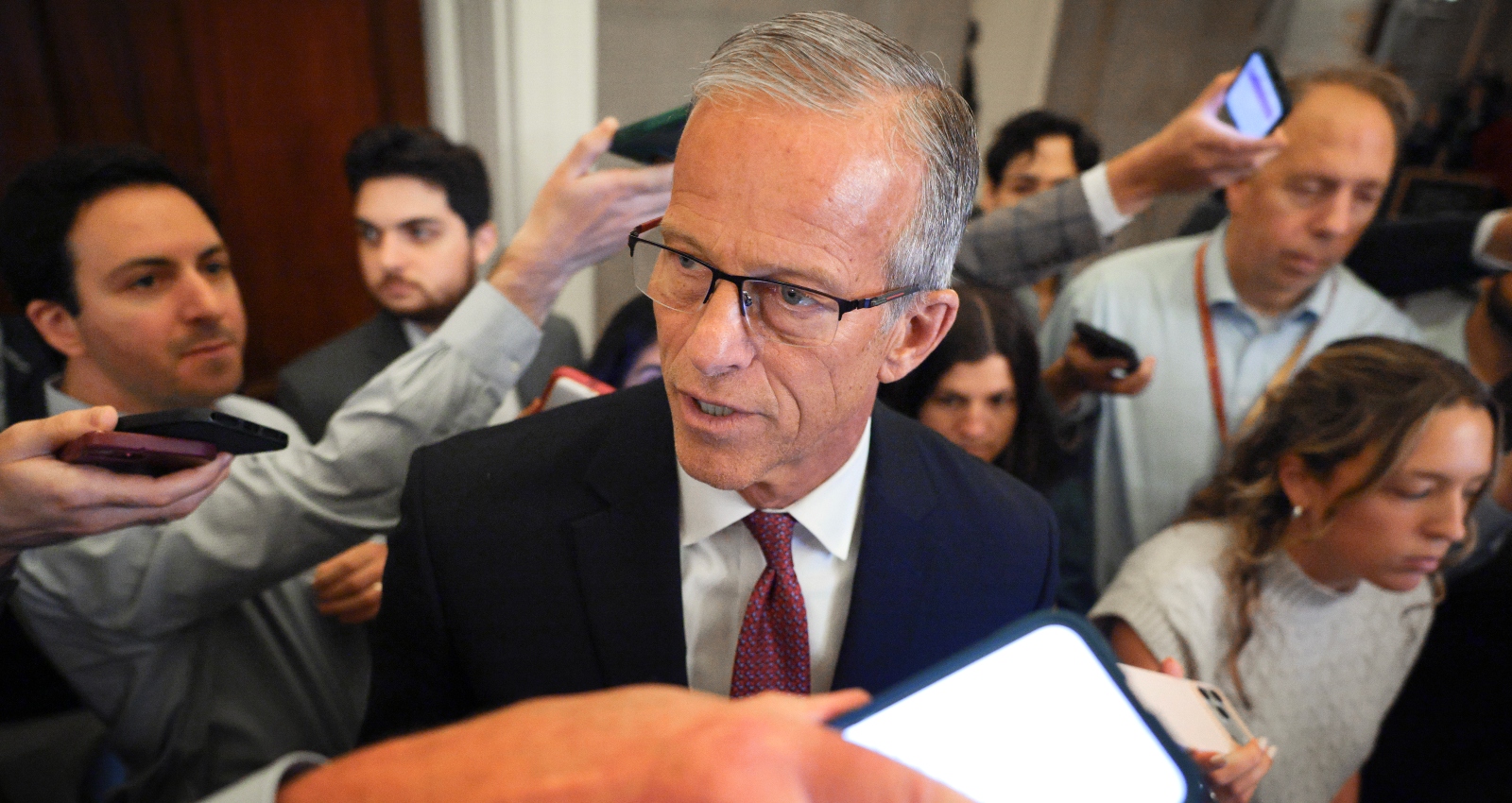
Senate Majority Leader John Thune of South Dakota intends to seek another term as the conference’s top Republican, his office confirmed following the election.
Because Democrats won control of the Senate, Thune would become minority leader if reelected.
No Republican senator has publicly announced a challenge to Thune as of this weekend.
Johnson, however, has obtained at least five signatures on a letter requesting a Senate Republican Conference meeting to discuss postponing the leadership elections.
Under conference rules, five Republican senators can force such a meeting through a written request.
Sens. Mike Lee of Utah, Rick Scott of Florida and John Kennedy of Louisiana are among Republicans who have indicated support for delaying the elections.
Johnson called moving ahead with leadership elections immediately after Tuesday’s losses “political malpractice.”
“We need to delay that. We need a robust discussion — I always call them a postmortem — of what happened,” Johnson said during an appearance on “The Clay Travis & Buck Sexton Show.”
“You just can’t, ‘Oh, let’s elect this leadership team by acclimation.’ That’s unacceptable.”
Johnson and his colleagues argue senators need additional time to evaluate the election results and determine what changes Republicans should make before 2028.
“We need to have serious discussions within our conference as to what we can do to improve the outcome in 2028,” the senators wrote.
“Holding leadership elections without engaging in a robust discussion and evaluation of how those running for leadership intend to lead would be political malpractice.”
“It is certainly not the way leadership elections should be conducted in the world’s most deliberative body,” the letter continued.
Johnson proposed using Tuesday’s scheduled gathering for a broader discussion rather than immediately proceeding with the leadership ballots.
He wants Republicans to delay voting “until we all have a chance to hear from leadership candidates as to what type of collaborative conference governing model we should adopt.”
Lee separately argued Republicans should wait until they have examined Tuesday’s results and know exactly who will comprise their conference next year.
“We have no business holding Senate Republican leadership elections until: (1) we’ve had ample opportunity to discuss what happened on Tuesday, and (2) we know who’s going to be in our conference,” Lee said.
Scott, who previously challenged for Republican leadership, said he supports the delay but does not intend to seek the top position himself.
“I don’t want to run again. I’ve run twice,” Scott said. “I think we oughta be listeners.”
Republicans lost at least seven Senate seats Tuesday as Democrats captured the majority, with several races still unresolved during the initial leadership discussions.
Democrats also won control of the House, creating an entirely different political environment for Republicans heading into 2027.
Thune nevertheless made clear following the election that he intends to remain Republican leader.
“As we head into 2027, Senate Republicans will not stand idly by as the far-left, socialist wing of the Democrat Party attempts to unwind everything we’ve done,” Thune said.
“Thankfully, we still have President Trump in the White House, and we’ll work with him to stop the worst impulses of Democrat extremism.”
“We cannot let their fringe positions become the mainstream.”
Thune has served as Republican leader since succeeding longtime Kentucky Sen. Mitch McConnell following the 2024 elections.
He defeated Scott and Sen. John Cornyn of Texas in that leadership contest.
Sen. John Barrasso of Wyoming, currently the Republican whip, is also expected to seek another term as the conference’s second-ranking member.