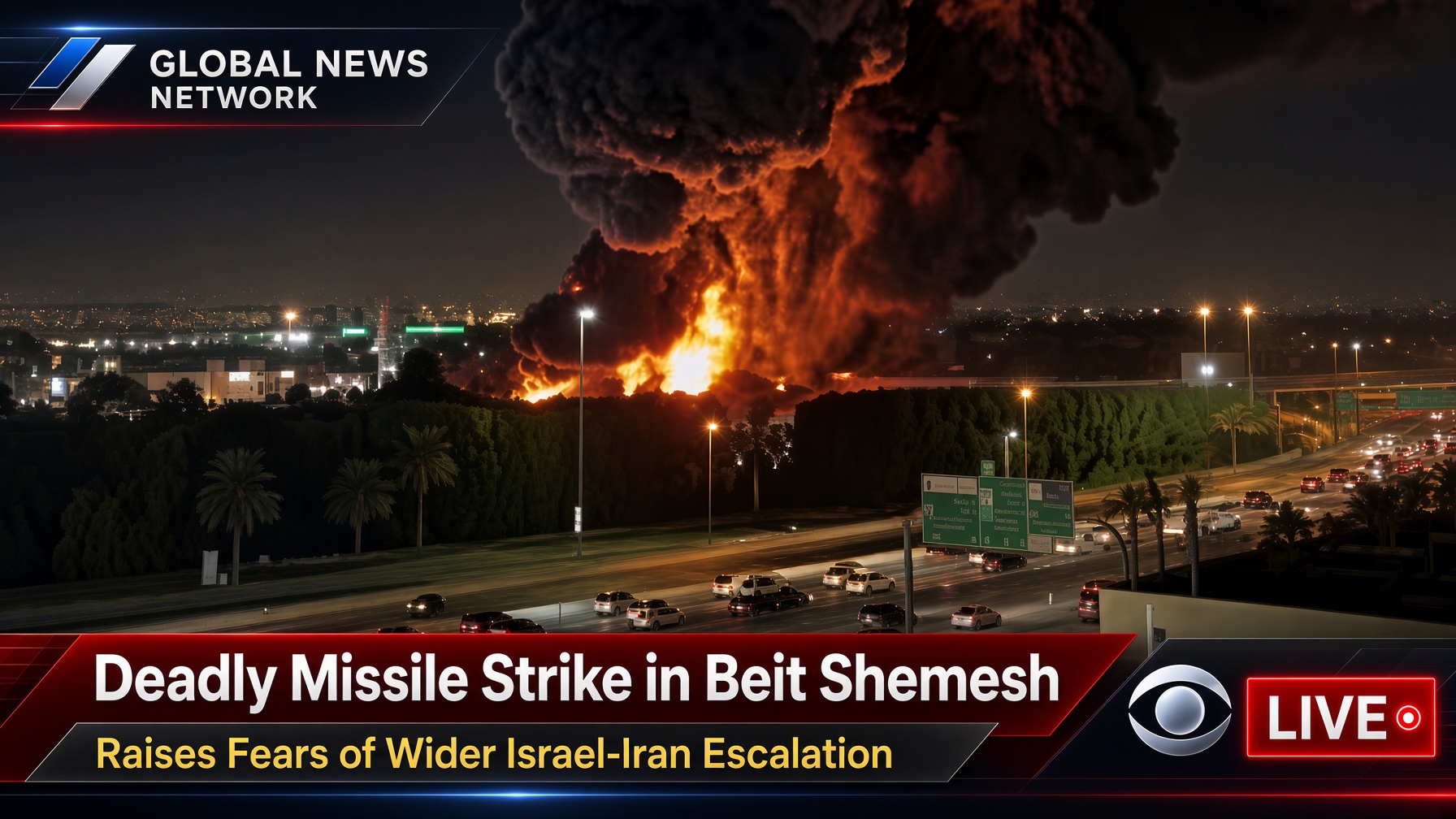
BEIT SHEMESH, Israel — A deadly missile strike on the Israeli city of Beit Shemesh has intensified concerns over the escalating confrontation between Israel and Iran, after Iranian attacks triggered warning sirens and sent residents rushing toward protected areas.
Israeli authorities reported multiple incoming threats as air-defense systems were activated across affected areas. The latest barrage caused significant damage in Beit Shemesh, west of Jerusalem, where officials said a ballistic missile struck a residential area, killing nine people and injuring 28 others.
Emergency medical teams, firefighters, police officers and search-and-rescue personnel were dispatched to the scene as crews searched damaged structures for victims and survivors. Two of the injured were reported to be in serious condition, two in moderate condition and 24 with relatively minor injuries.
Missile Strike Causes Shelter Collapse
The circumstances surrounding the Beit Shemesh attack made the incident particularly devastating. According to Israeli officials, residents had sought protection inside a public shelter when the missile struck a structure above it.
Jerusalem District Police Chief Avshalom Peled said the missile directly hit a synagogue, causing the building to collapse onto the shelter beneath it. The impact reportedly trapped people under heavy debris and created challenging conditions for rescue crews.
Authorities said many of the casualties were believed to have been inside the protected area at the time of the strike. Emergency workers carefully moved through the wreckage while assessing structural dangers and searching for anyone who might remain trapped.
The incident has underscored the vulnerability of civilians even when they follow emergency instructions and seek refuge in designated shelters. While such facilities are designed to provide protection from missile attacks, a direct impact on nearby or overlying structures can create additional dangers.
Israel and Iran Remain on High Alert
The strike came amid a broader and increasingly dangerous confrontation between Israel and Iran, involving missile attacks, air-defense operations and threats of further retaliation.
Israeli authorities have placed emergency services and security personnel on heightened alert as they assess the possibility of additional attacks. Residents in vulnerable areas have been urged to remain near protected spaces and follow instructions issued by local authorities.
The latest casualties are likely to add pressure on Israeli leaders as they consider their response. Any further Israeli military action could deepen the confrontation and increase the risk of the conflict spreading to other parts of the region.
The United States is also closely monitoring the situation, particularly because American forces and personnel remain present across the Middle East. Washington faces the challenge of supporting regional partners while attempting to protect U.S. personnel and prevent a broader escalation.
Civilian Toll Raises Alarm
Beyond the strategic calculations of governments and military commanders, the Beit Shemesh strike highlights the growing human cost of the confrontation.
For families in affected communities, missile warnings have become a terrifying part of daily life. The destruction of homes and civilian buildings demonstrates how quickly a regional military confrontation can reach populated areas.
Authorities cautioned that the situation remains fluid and that casualty figures could change as emergency operations continue and investigators assess the damage.
For now, Israeli security forces remain on alert while rescue personnel continue working at the site. Residents are being urged to remain vigilant and comply with official safety instructions.
The deadly strike in Beit Shemesh represents another stark reminder of the risks created by the rapidly escalating Israel-Iran confrontation. As both sides weigh their next moves, concerns are growing that another round of retaliation could produce even greater civilian casualties and push the region toward a much wider conflict.