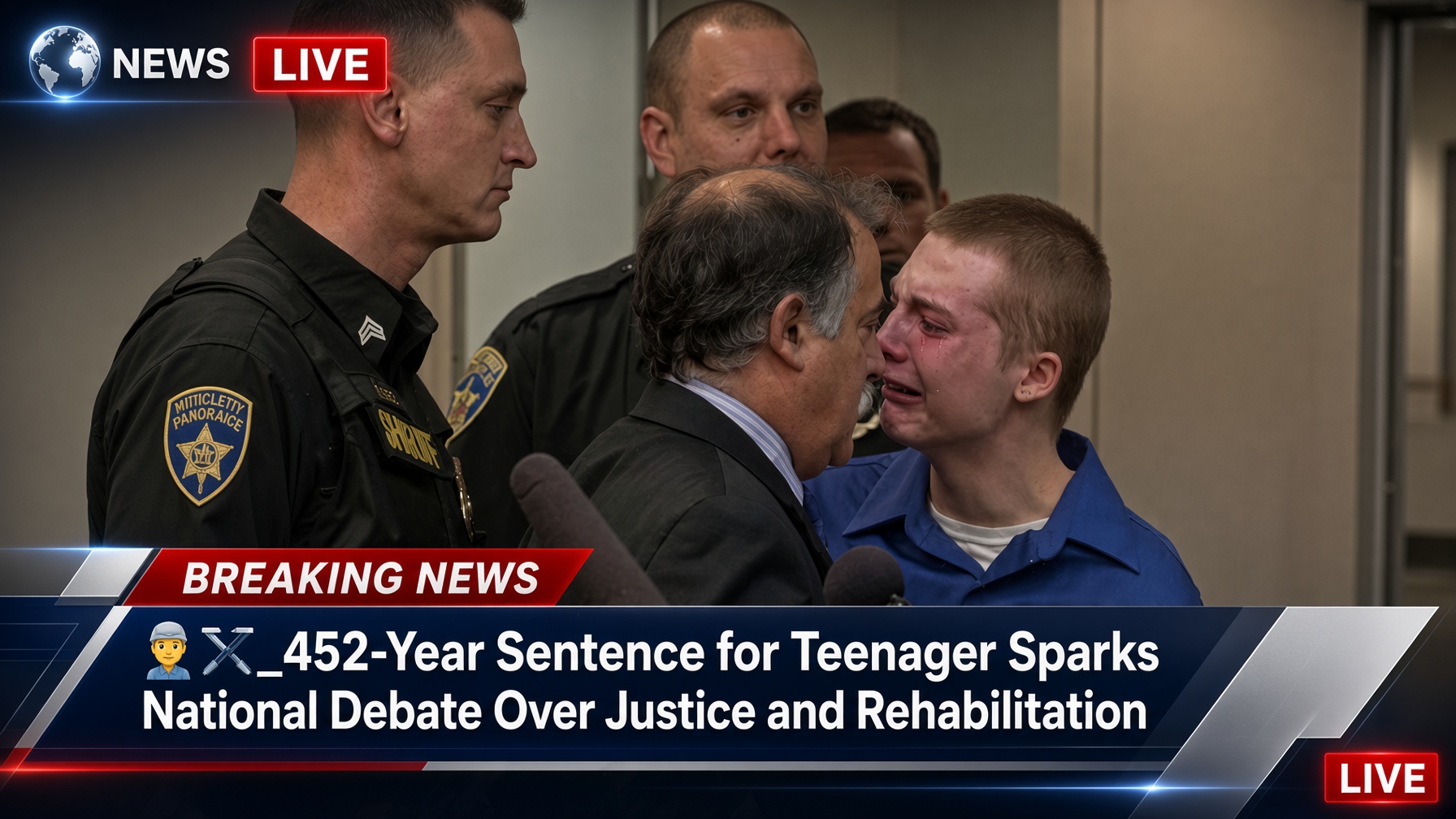
NATIONAL — A courtroom decision imposing a staggering 452-year prison sentence on a teenager has ignited a broader debate over punishment, public safety and whether young offenders should retain a meaningful opportunity for rehabilitation.
The extraordinary sentence followed a case in which prosecutors portrayed the teenager as a serious and continuing threat to the community. During proceedings, prosecutors emphasized the severity of the alleged offenses and the lasting consequences suffered by victims and their families.
The defense, however, focused on the defendant’s age and the potential for rehabilitation. Attorneys argued that adolescence is a period of significant development and that a young person’s capacity for change should remain an important consideration when determining punishment.
The competing arguments placed the court at the center of a difficult question facing justice systems: how should society balance accountability for serious crimes with the possibility that a young offender can change over time?
Victims’ Testimony Adds Emotional Weight
Testimony from victims and their families underscored the human consequences at the heart of the case.
Those affected described lasting physical and emotional consequences, emphasizing the extent to which the teenager’s actions had altered their lives. For supporters of the lengthy sentence, those accounts demonstrate why severe punishment may be necessary to recognize the harm caused and protect the broader community.
The prosecution’s position reflected the view that the seriousness of the offenses warranted a sentence capable of keeping the defendant away from society for an exceptionally long period.
For critics, however, the extraordinary length of the punishment raises a different set of concerns.
Justice System Faces Scrutiny
The case has renewed discussion about how courts handle defendants who commit serious offenses while still legally considered juveniles or young people.
Supporters of lengthy sentences argue that age should not eliminate accountability when victims have suffered severe or permanent harm. They contend that protecting the public and recognizing victims’ rights are fundamental responsibilities of the justice system.
Critics counter that extremely long sentences can effectively eliminate any realistic possibility of rehabilitation. They argue that young offenders may undergo significant psychological and behavioral changes over the course of decades and that sentencing should account for that potential.
The debate extends beyond the individual case, touching on broader questions about punishment, rehabilitation and the purpose of incarceration.
A Broader Debate Over Youth and Accountability
The 452-year sentence has therefore become a focal point in a larger discussion about how society responds to serious crimes committed by young people.
At its center is a difficult balance: ensuring accountability and public safety while recognizing that youth can be associated with substantial capacity for development and change.
Whatever conclusions emerge from the case, the sentence has forced renewed attention on the boundaries of punishment and the responsibilities of the justice system.
For victims and their families, the ruling represents an attempt to address profound and lasting harm. For advocates of rehabilitation, it raises questions about whether justice should leave room for transformation.
The case ultimately illustrates the enduring challenge of determining how severe punishment should be when the defendant is still young—and whether justice can simultaneously provide accountability, protection and the possibility of redemption.