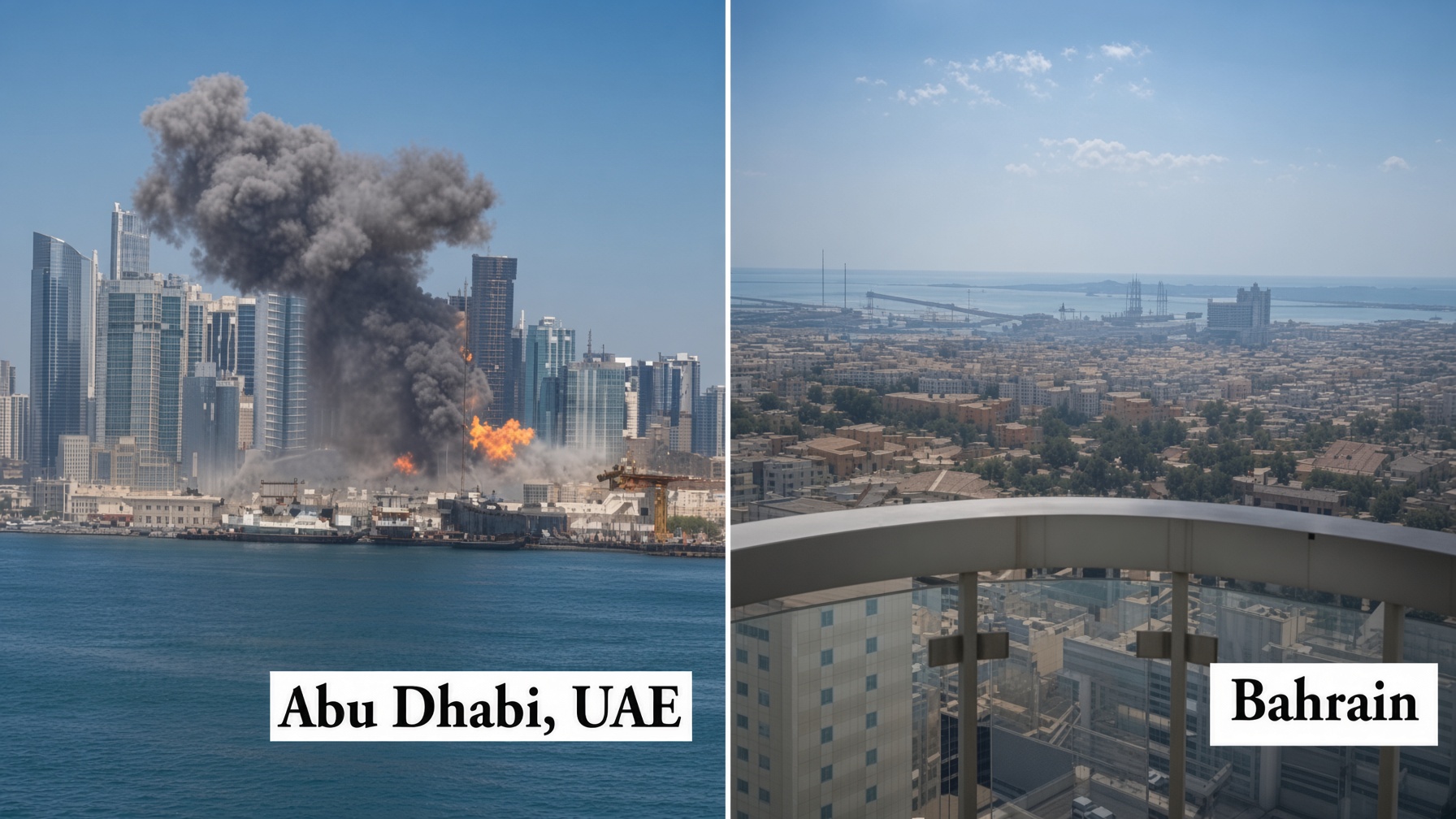
DUBAI / WASHINGTON — The Persian Gulf is facing renewed security concerns following reported waves of Iranian missile and drone attacks targeting facilities associated with the U.S. military across the United Arab Emirates, Bahrain, Qatar and Kuwait. The reported escalation has placed regional air defense systems on heightened alert and intensified concerns that the confrontation could spread beyond its current boundaries.
The attacks underscore the strategic risks confronting Gulf nations that host American military personnel and infrastructure while maintaining their own security interests amid rising tensions with Tehran. As regional governments monitor potential aerial threats, the security situation has placed renewed pressure on military coordination, civilian protection measures and diplomatic efforts to prevent a broader conflict.
Details about the extent of the reported damage, the number of weapons involved and the effectiveness of individual interceptions remain subject to verification. Claims from parties involved in the confrontation should be distinguished from independently confirmed assessments.
Gulf Military Installations on Alert
In the United Arab Emirates, attention has focused on Al Dhafra Air Base, located south of Abu Dhabi. The installation plays an important role in U.S. regional operations, including aerial surveillance, refueling and other military support missions.
Reports of incoming aerial threats prompted heightened security measures as air defense systems monitored the surrounding airspace. Interceptors were reportedly used against approaching targets, although the extent of any damage to military infrastructure remains unclear.
Iranian state-aligned sources have made claims about strikes against U.S.-linked facilities, but such statements require independent confirmation. Establishing the actual impact of an attack can take time, particularly when military authorities restrict access to affected installations for operational and security reasons.
Bahrain also remains a strategically significant location. The island nation hosts Naval Support Activity Bahrain, which serves as the headquarters of U.S. Naval Forces Central Command and the U.S. Fifth Fleet. From this location, American naval forces support maritime security operations across important waterways in the Middle East.
Any sustained threat to Bahrain could complicate naval planning and increase pressure on regional shipping security. Reports of aerial interceptions near military facilities have highlighted the importance of air defense coordination, although specific damage claims and operational consequences require confirmation.
Qatar and Kuwait face similar concerns because of their roles in the regional military network.
Qatar and Kuwait Face Continuing Security Risks
Qatar’s Al Udeid Air Base is one of the most important American military installations in the region. It supports U.S. Central Command operations and provides infrastructure for air missions conducted across the Middle East.
Heightened threats to the base could require additional force-protection measures, adjustments to aircraft operations and the dispersal of personnel or equipment when military commanders consider such steps necessary. However, specific claims about damage to the installation should not be treated as confirmed without reliable supporting evidence.
In Kuwait, air defense units and security authorities must also account for potential threats from drones and missiles approaching military or shared-use facilities. The country’s geographic position near Iraq makes its logistics infrastructure important to the movement and support of personnel and equipment throughout the northern Gulf.
Taken together, the reported incidents demonstrate the challenges of protecting several military installations across a wide geographic area against different types of aerial weapons.
Saturation Attacks Challenge Air Defenses
The use of drones alongside ballistic and cruise missiles can place considerable demands on modern air defense networks. Different weapons travel at different speeds and altitudes, requiring detection systems, command centers and interceptor units to coordinate their responses under severe time pressure.
Low-cost drones can also create an economic imbalance when defenders must use expensive interceptor missiles to neutralize incoming threats. Sustained attacks may strain interceptor inventories, complicate radar coverage and force military planners to make difficult decisions about how to allocate limited defensive resources.
The extent of that pressure depends on the number of incoming weapons, their trajectories, the effectiveness of electronic warfare and the capabilities available to defending forces. Regional governments and military partners must therefore maintain coordination while preparing for the possibility of repeated attacks.
Strait of Hormuz Raises Global Economic Concerns
The security situation also has implications for international energy markets, particularly around the Strait of Hormuz. The narrow waterway connects the Persian Gulf with the Gulf of Oman and serves as a critical route for global oil shipments and liquefied natural gas exports.
Any serious disruption could affect shipping schedules, increase transportation costs and push energy prices higher. Tanker operators, insurers and commodity traders closely monitor the area because even temporary uncertainty can influence commercial decisions.
If threats to merchant vessels intensify, shipping companies could delay transits, seek alternative arrangements where available or demand higher insurance premiums to account for increased risks. A prolonged disruption could place additional pressure on fuel prices, supply chains and inflation in energy-importing countries.
However, the scale of any economic impact would depend on whether maritime traffic is actually interrupted and how long the disruption lasts.
Diplomatic Pressure Mounts as Risks Increase
For Gulf governments, the situation presents a difficult balancing act. They must protect their populations and critical infrastructure while managing the consequences of hosting U.S. military forces during a confrontation involving Iran.
Washington and its regional partners face the challenge of maintaining credible defenses without allowing retaliatory actions to trigger a wider cycle of escalation. Continued military activity, miscalculated interceptions or an attack causing substantial civilian casualties could sharply complicate efforts to contain the conflict.
For now, the central priorities remain monitoring incoming threats, protecting military and civilian facilities, assessing reported damage and maintaining communication among regional security partners.
The broader outlook remains uncertain. Unless diplomatic channels can produce a meaningful reduction in hostilities, the Persian Gulf will remain vulnerable to further military escalation, with consequences extending well beyond the region’s borders.