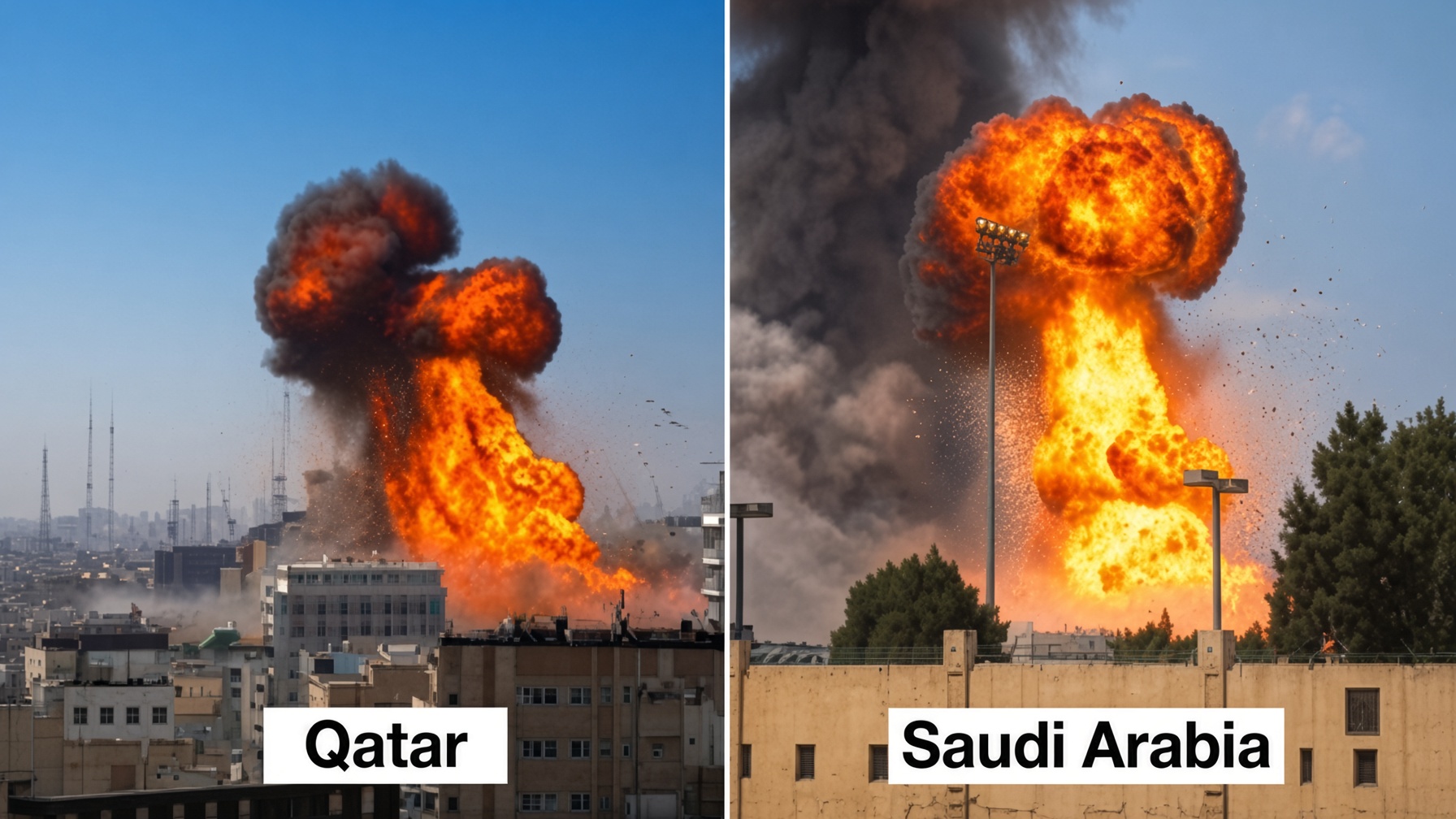
DUBAI — Tensions across the Persian Gulf have sharply escalated as Iran has launched missile and drone attacks against U.S. allies in the region, raising concerns about the security of American military personnel, critical infrastructure and one of the world’s most important energy corridors.
The latest escalation follows renewed fighting between the United States and Iran after a period of reduced hostilities. Iranian forces have targeted U.S. military interests and allied positions in several Gulf countries, including Kuwait and Bahrain, both of which host American military facilities.
Kuwaiti authorities have reported missile and drone attacks and said their air-defense systems were responding to incoming threats. Bahrain has also reported attacks as Iran retaliated following U.S. strikes on Iranian targets. Officials in both countries have urged residents to follow security instructions and remain alert as the situation develops.
U.S. Military Bases Remain on High Alert
The escalation is particularly significant because several Gulf states host major U.S. military installations that support American operations throughout the Middle East.
Qatar is home to Al Udeid Air Base, a major U.S. military facility, while Bahrain hosts the U.S. Navy’s Fifth Fleet. Kuwait also serves as an important base for American military operations in the region.
Iran has previously claimed to have targeted U.S. military positions in Qatar, Kuwait and Bahrain. Reuters reported in July that Iranian forces announced attacks on Gulf countries hosting U.S. airbases, while Kuwait confirmed that its military was responding to Iranian drone attacks.
The United Arab Emirates has also faced Iranian attacks during the broader conflict. In July, Emirati authorities said Iranian cruise missiles struck two UAE-linked oil tankers transiting near the Strait of Hormuz, injuring crew members.
Strait of Hormuz at Center of Crisis
The latest confrontation is closely connected to the Strait of Hormuz, a narrow waterway that carries a major share of global oil and gas shipments.
The United States has conducted military operations around the strait, while Iran has threatened additional measures and recently announced plans for a maritime exclusion zone. The U.S. military has rejected some Iranian claims about attacks on American vessels, underscoring the difficulty of independently verifying battlefield reports as events unfold.
The conflict has already affected global energy markets. Reuters reported that Brent crude approached $100 a barrel on Sept. 8 as investors assessed the risks to Gulf energy infrastructure and shipping. Despite the disruption, continued flows through the Strait of Hormuz and alternative export routes have helped limit an even sharper increase in prices.
Regional governments remain on heightened alert as military exchanges continue. Authorities are urging civilians to follow official instructions and avoid military facilities or restricted areas.
With American forces stationed across the Gulf and Iran continuing to threaten U.S. interests and regional allies, further attacks could broaden the conflict and increase pressure on governments seeking to protect their populations, infrastructure and commercial shipping.
The situation remains fluid, and claims about individual strikes, damage and casualties may change as military officials and independent investigators provide additional information.